


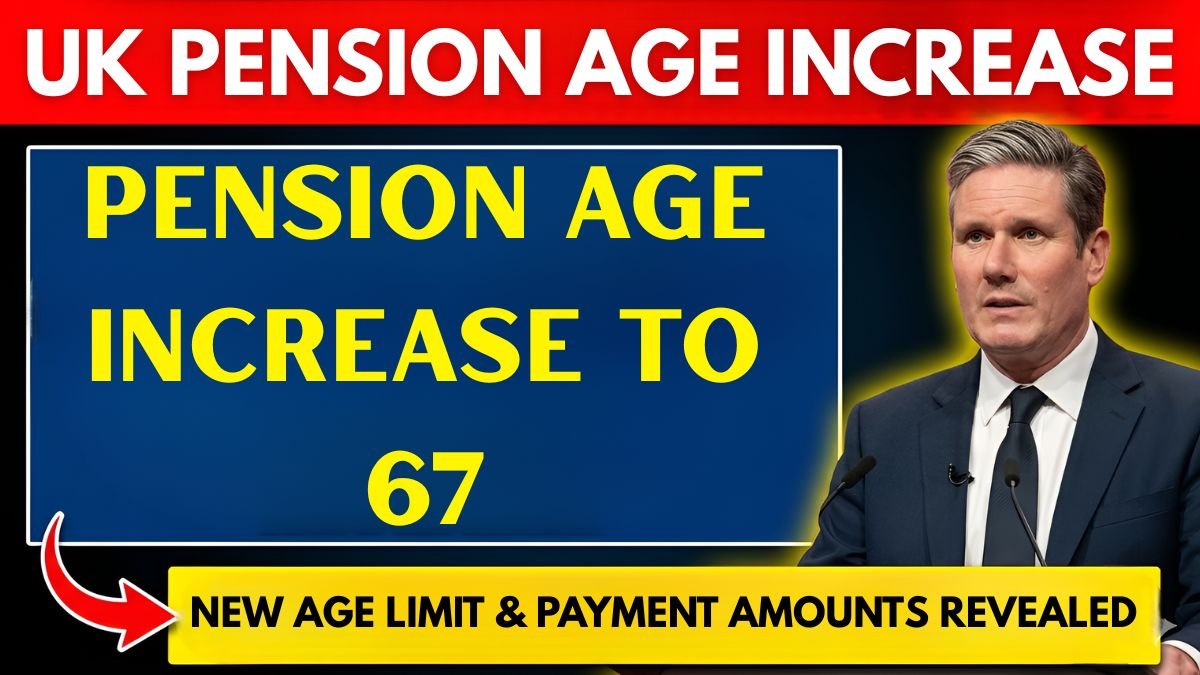
A major change has begun for millions of people in Britain. The state pension age is now being gradually raised to 67 years. This decision by the Department for Work and Pensions (DWP) is set to impact tens of millions of people in the coming years.
This change is not being implemented abruptly, but rather in a phased manner. While the pension eligibility age was previously 66, it will now be raised to 67 over the next two years. Alongside this decision, the pension amount has also been increased, which will undoubtedly provide some relief to people.
Why is the pension age being raised?
The government states that average life expectancy has increased, and people are living longer than before. Given this context, this change is deemed necessary to ensure the long-term sustainability of the pension system.
However, this argument does not satisfy everyone. Many people believe that the quality of life and health standards are not uniform across all sectors; therefore, a single, uniform pension age does not impact everyone equally.
Who will be affected first?

The immediate impact of this change will fall upon those born between April 6, 1960, and May 5, 1960.
These individuals will now have to wait an additional month to receive their pension. Gradually, this gap will widen, and eventually, the pension age for everyone will reach 67.
Public Reaction: Concern and Frustration
The public response to this change has been mixed.
For some, it is merely a minor adjustment; however, for many others, it has a significant impact on their plans. For instance, many people previously anticipated retiring at the age of 65, but they may now be required to work for a longer period.
There is also concern among the younger generation that by the time their turn comes, the pension age could rise to 70 or even higher. This could significantly affect their future plans and lifestyle.
How much has the pension amount increased?
The good news is that pension amounts have also been increased. This increase has been implemented under the “Triple Lock” policy, which is determined based on whichever is highest among wage growth, inflation, or a minimum of 2.5%.
New Pension Rates:
- New Flat-Rate State Pension:
- £241.30 per week (approximately £12,547.60 per year)
- Old Basic State Pension:
- £184.90 per week (approximately £9,614.80 per year)
This includes an annual increase of £574.60 and £439.40, respectively.
What is required to receive a full pension?
To receive a full State Pension, you typically need to have made 35 years of National Insurance (NI) contributions.
If there are gaps in your record—for instance, if you worked abroad or left the workforce to care for children—your pension amount may be reduced.
Will this affect everyone equally?
No, the impact of this change will not be the same for every individual.
According to experts:
- People with lower incomes will be more significantly affected.
- Those in poor health will be more heavily impacted.
- Individuals without private savings may face greater difficulties.
In some regions, people remain healthy into older age, whereas in others, health tends to deteriorate sooner. Consequently, a uniform pension age is not being viewed as equitable for everyone.
How much will the government benefit?
Raising the pension age is expected to yield significant financial benefits for the government. According to estimates, by 2030, this change could save the government approximately £10 billion per year.
This is why the government describes this decision as essential for the long term.
Could the pension age rise further in the future?
Under current legislation, there are plans to raise the pension age to 68 in the future (between 2044 and 2046). However, this is currently under review, and further changes remain possible.
Conclusion
The decision to raise the pension age in Britain to 67 is a significant and impactful step. While, on one hand, it will help control government expenditure, on the other, it will also affect the retirement plans of millions of people.
Although the increase in pension amounts certainly offers some relief, the rising age limit may require people to work for a longer duration.
In the times to come, it will be interesting to observe what additional support the government provides—alongside this change—to those who will be most affected by it.
FAQs
Q. What is the new UK state pension age?
A. The pension age is gradually increasing from 66 to 67.
Q. When will the pension age reach 67?
A. It will rise in stages over the next two years.
Q. How much is the new state pension amount?
A. The new full state pension is about £241.30 per week.
Q. Who is affected first by the age increase?
A. People born between April 6 and May 5, 1960 are affected first.
Q. Why is the pension age increasing?
A. It is rising due to longer life expectancy and to reduce government costs.