


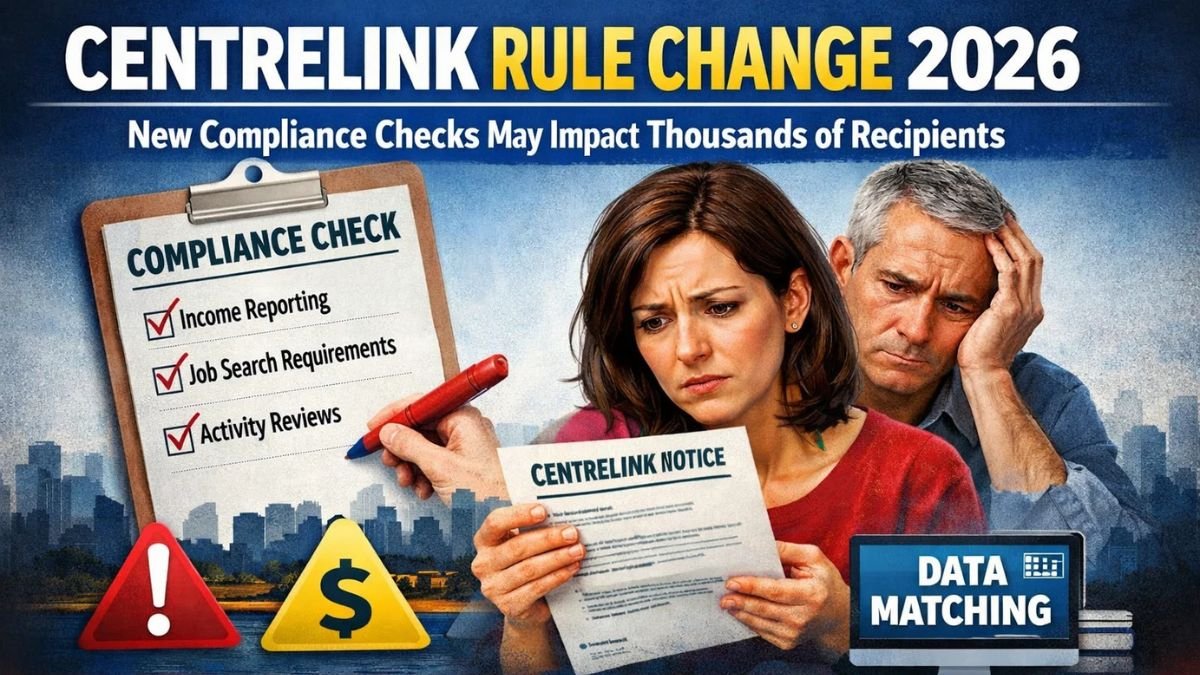
Centrelink Rule Change 2026: The new Centrelink rules, due to take effect from 2026, have brought a number of significant changes to Australia’s social security system. The main purpose of these changes is to ensure that government assistance reaches only the right and eligible people. To this end, the government is now emphasizing more stringent monitoring and verification processes than ever before. In particular, the method of providing income information is being made more transparent, in which beneficiaries will have to update all information related to their earnings in a timely and accurate manner.
In addition, the automated data matching system between government databases has now been enhanced, reducing the chances of misinformation or disturbances. However, it also means that each beneficiary will be watched more closely than ever before. Especially those who are receiving job-seeker payment will be required to comply with their activity requirements. If a person does not report on time or does not follow the rules, the risk of his or her payments being stopped may increase.
Impact of new Compliance Checks on Beneficiaries
The new 2026 rules may seem a bit tricky at first for many, especially those who are not overly familiar with digital systems. The biggest change now is that the reporting system has been made real-time. Where earlier people provided information periodically, they must now provide regular and immediate updates. This means that each individual must be more vigilant towards his obligations.
At the same time, the scrutiny of documents has now become more stringent. Beneficiaries may have to provide additional proof related to their income, job or personal situation. If an individual does not provide the correct documentation on time, he or she may receive a ‘compliance review’ notice, which may delay payment.
However, there is also a positive side to this system. This change will reduce overpayments and erroneous payments, ensuring that all beneficiaries receive assistance in an accurate and fair manner. Therefore, if a person updates information on time and keeps his records organized, he will not face any trouble.
How to prepare for the changes of 2026?
It is extremely important to prepare yourself according to these new rules to avoid any penalties or problems such as payment stalling. First, each beneficiary should check their account regularly and ensure that all of their personal information is updated and correct.
Additionally, setting reminders to remember reporting dates can be a good way to do so. This will allow you to submit your information on time and avoid any mistakes. Furthermore, it is also important to seek information about the rules from the government website or official sources, which will increase your understanding and awareness.
If you receive a notification or message, respond to it immediately. Delaying can interrupt your payment. Therefore, being proactive and aware is the key to handling these changes with ease.
What will be the implications in the future?
These 2026 changes are a big step towards making Australia’s welfare system more transparent and effective. These rules may seem a bit strict at the beginning, but in the long run they will improve the system and reduce the misuse of government funds.
For those who will quickly understand these digital systems and follow the rules, this change will not be too difficult. At the same time, this reform also encourages people to take benefits responsibly. This may see even more new technological features and easier processes in the future.
The difference between the old and new rules
| Compliance Area | Old System | New 2026 Rules |
|---|---|---|
| Income Reporting | Periodic updates | Real-time reporting |
| Verification | Limited checks | Enhanced data matching |
| Documentation | Basic proof required | Additional documents needed |
| Monitoring | Manual review | Automated systems |
| Penalty Risk | Lower enforcement | Stricter penalties |
Conclusion
Overall, these new 2026 rules are an important step towards making the system more equitable and effective. If beneficiaries give information on time, keep their documents correct and follow the rules, they will not face any trouble. Awareness and activism is the best way to successfully embrace this change.
FAQs
Q. What are the 2026 Centrelink changes?
A. Stricter compliance checks, real-time reporting, and better data verification.
Q. Do I need to report income more often?
A. Yes, income must be reported in real time instead of periodically.
Q. What happens if I miss reporting deadlines?
A. Your payments may be delayed or temporarily stopped.