
Retiring at 62 in Australia 2026: In today’s times, planning for retirement has become more challenging than ever before. Particularly for those living in Australia, the age of 62 marks a significant milestone—one that brings a crucial question to the fore: Do you have sufficient superannuation savings to ensure a comfortable lifestyle?
The sum accumulated over years of hard work, mandatory contributions, rising inflation, and market fluctuations is precisely what determines whether one’s retirement will be secure or uncertain. New data from 2026 has further underscored the reality that a significant gap still exists between people’s savings and their actual needs.
Average Super Balance at Age 62: What Do the Statistics Reveal?
According to recently released figures, the average superannuation balance for men aged between 60 and 64 falls within the range of approximately $430,000 to $450,000. For women, however, this figure is considerably lower—ranging from about $330,000 to $350,000.
When looking at couples, their combined average balance sits between $700,000 and $800,000. While these figures may sound robust on the surface, the reality is that there is a substantial difference between the “average” and the “median”.
In truth, the average figure is skewed upwards by a few individuals holding very large balances, whereas, in reality, nearly half of the population approaches retirement with savings of less than $250,000. This implies that a great many people are unable to retire with the level of financial security they truly require.
[also_read id=”30″]
How Much Savings Are Really Needed for Retirement?

According to the financial industry, securing a comfortable retirement in 2026 requires an individual to have approximately $595,000 to $650,000 in savings. For a couple, this figure is estimated to be between $690,000 and $750,000. If we compare these figures against the average superannuation balance, it becomes evident that single men and women fall significantly short of this target.
However, while a smaller sum may suffice for a “modest”—or simple—lifestyle, such a lifestyle entails limited access to amenities such as travel, dining out, or private healthcare services.
In other words, retirement is not merely a matter of reaching a specific numerical target; rather, it depends fundamentally on the kind of lifestyle you aspire to lead.
Why Do Women Lag Behind?
A significant disparity exists between men and women within Australia’s superannuation system. Women typically hold lower superannuation balances, a phenomenon driven by a confluence of social and economic factors.
Factors such as taking career breaks to care for children, working part-time, and generally earning lower overall incomes all contribute to—and negatively impact—their superannuation balances.
Although the government has implemented certain reforms in recent years—such as extending superannuation contributions to paid parental leave starting in 2025—it will take some time before the full impact of these measures becomes apparent.
What Happens If You Retire at 62?
In Australia, individuals are permitted to access their superannuation funds after the age of 60, subject to certain conditions. Consequently, many people choose to retire at the age of 62.
However, this presents a significant challenge: the Australian Age Pension typically does not become available until the age of 67. This means that if you retire at 62, you must rely entirely on your personal savings to cover your living expenses for a period of at least five years.
During this interim period, your primary source of income consists of withdrawals (drawdowns) from your superannuation fund, and your capital remains exposed to market risks.
Financial experts generally advise limiting annual withdrawals to just 4–5% of your total savings to ensure that your funds last throughout your retirement.
For example:
- Approximately $16,000–$20,000 annually from savings of $400,000
- $28,000–$35,000 from savings of $700,000
In many cases, this amount becomes sufficient only when combined with additional income or a future pension.
The Impact of Rising Living Costs in 2026
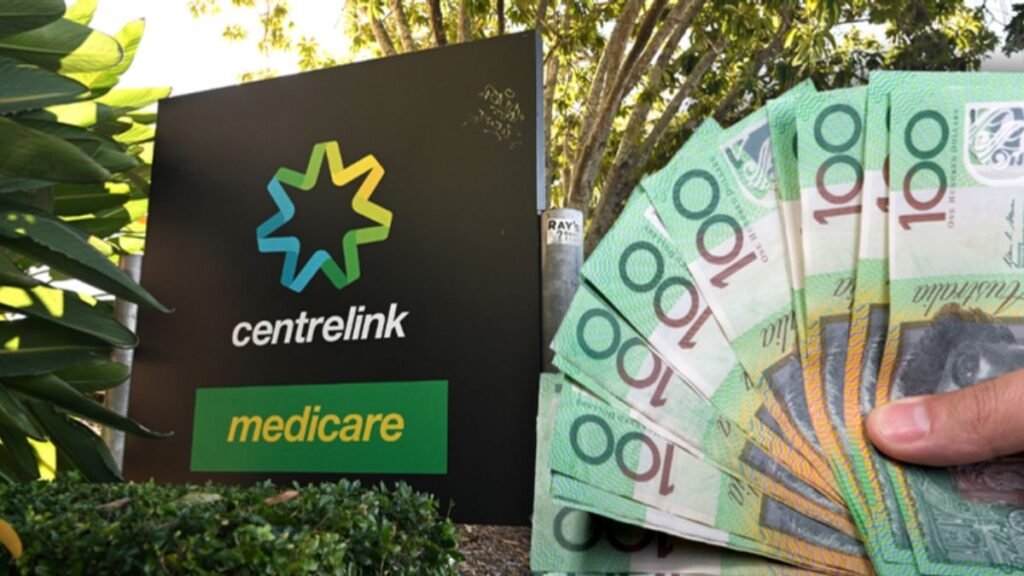
When planning for retirement, the biggest challenge today is the rising cost of living. Over the past few years, the prices of groceries, electricity, insurance, and healthcare services have increased significantly.
Although inflation is no longer as rapid as it once was, the overall level of expenses remains higher than before.
This situation can be particularly difficult for those who rent, as housing costs continue to rise steadily. Consequently, retiring at the age of 62 becomes a major financial decision.
[also_read id=”14″]
Is Retiring at 62 the Right Decision?
This depends entirely on your individual circumstances. For some, it may be the perfect time—especially if their health or lifestyle demands it.
However, in many cases, working for a few more years can prove beneficial. If you continue working for another 2–3 years, not only will your savings increase, but your superannuation balance could also grow significantly stronger due to the power of compound growth.
For instance, combining an additional annual contribution of $20,000 with investment returns could yield an extra benefit of $50,000 to $70,000 over just a few years.
What Should You Consider Before Retiring?
If you are approaching the age of 62 in 2026, taking certain essential steps is crucial:
- Consolidate all your superannuation accounts to view your total balance.
- Use a superannuation fund calculator to estimate your future income.
- If possible, consider downsizing your assets (such as your home) to generate additional funds.
- Understand the eligibility criteria for the Australian Age Pension.
- And most importantly, seek advice from a financial expert.
Conclusion
Retiring at the age of 62 is a major and significant decision—one that depends not solely on the size of your savings but on your entire lifestyle, health, and future needs.
Data from 2026 clearly indicates that many people are still falling short of their goal for a “comfortable” retirement. In this context, proper planning, timely decision-making, and awareness are the only things that can guide you towards a secure and balanced retirement. Ultimately, retirement is not merely an age or a number—it is the beginning of a long journey that is absolutely essential to plan wisely.
FAQs
Q. What is the average super balance at age 62 in Australia?
A. Around $430k–$450k for men and $330k–$350k for women.
Q. How much super is needed for a comfortable retirement?
A. About $600k for singles and $700k+ for couples.
Q. Can you access super at age 62?
A. Yes, if you meet the retirement or release conditions.
Q. When can you receive the Age Pension in Australia?
A. Typically from age 67.
Q. Is retiring at 62 a good decision?
A. It depends on savings, lifestyle needs, and financial planning.